rural areas

![]() |
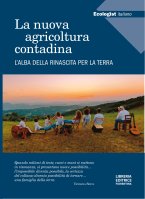
Wendell Berry, Giannozzo Pucci, Vandana Shiva, Maurizio Pallante BASIC TENETS Agriculture, including forestry is indispensable for the survival of humanity. The countryside provides all the fundamental requirements of water, air, biodiversity, food, energy, fibers (cotton, wool, linen), and all building materials. The land is sacred, we did not make it. It is upon the soil that the identity of human communities is founded, they are not to be alienated, fragmented and based on merely utilitarian considerations. The ground we walk on is made partly of the dust of our ancestors; our bodies, when they die, enrich it, proving that the earth does not belong to us, but that we belong to the earth. The countryside is a living community of innumerable organisms and, like all living beings, it has to be nourished, cared for, allowed to rest. It is through our bodies that we communicate with it. The countryside is essential to the renewal of human society and therefore rural areas must be enriched and their sacred qualities rediscovered. All civilisations are based on agriculture, even industrial civilisation. No civilisation has bean so destructive of nature as our own, which is therefore the most fragile of all. Industrial technologies applied to the soil — weed-killers, chemical fertilisers, and pesticides, fossil fuel-driven machines, genetically manipulated seeds, monocultures of commodities for the international market, modifying the landscape to suit it to the requirements of machines — are not agriculture but instead are industrial activities and should not enjoy “public interest” privileges. The theft of a single apple is punished by law, but systematically plundering the genetic heritage and polluting the food-chain are not illegal. No amount of profit made from this destruction can justify it. The earth is not and never will be a commodity. It is a common good. To be used and enjoyed and cared for by everybody is its natural destiny. The air purified by trees and winds is common to all; the water made drinkable by the roots of plants, by the rocks and waterfalls, is common to all; the humus that builds up under the trees and in properly tended fields, because it enriches the food chain, is common to all. Everything which enables insects, birds, animals and wild plants to survive, is a common heritage. So are naturally generated seeds. So are cultivated plant seeds selected by the work of thousands of anonymous farmers and indigenous communities, who have freely bequeathed the results of their labour and discoveries to all the generations after them. The earth is the common inheritance of indigenous people. Farming societies, where private property is a long established reality, also preserve civic practices such as common by-ways, networks of ditches, banks of rivers and streams, wells freely available to quench the thirst of both neighbours and wayfarers. Anyone who preserves and bequeaths this irreplaceable legacy, by keeping the natural laws and feeding plants, improving the purification and replenishment of underground water supplies, building up humus, enriching soil, neutralising and transforming toxic agents into useful, healthy substances, protecting soil from erosion, increasing and improving the quality of food for local communities, giving the landscape the marks of domestic beauty, is working in the public interest. This work overrides and surpasses the work of states and international organisations. Farmers and tribal people are not producers of commodities, they are guardians of the earth and creators of our common survival. By producing goods which are essential for their own survival, they nurture the landscape and domesticate it for the benefit of the community of beings, living or not, to which we belong. Farming and indigenous cultures are orally transmitted. They are based on analogical intelligence, intuition and direct symbols, a language used by nature itself. They write on the landscape with their plants, animals, tools and the goods they produce. They do not write on paper. Their work leaves room for the voices and the silence of every living being. Farming and tribal communities apply survival ethics, which is to say that they earn their living directly from nature, using culturally transmitted wisdom and skills, which imply a continuous preservation of natural, social, and cultural balances. Their food cycle is intrinsically local, focused on survival. The labour of small farmers and indigenous people who conform to survival ethics, fulfill the following duties inasmuch as their protection and care of their own places affect all the world. They preserve and enrich the soil, using biomass to create as much humus as possible. They encourage perennial vegetation, by growing hedges, trees, and grams and by respecting the necessary cohabitation of the greatest possible number of species. They increase the water storage capacity of the soil and in underground reservoirs, and protect it as drinking water and for other uses. They take care of the soils by the continual upkeep of ditches, lanes, dry stone walls, banks, cart tracks, terraced fields, etc. They improve the variety and re-population of locally adapted vegetable and animal species, thus increasing bio-diversity and avoiding monocultures. They care for the cleanliness of their dwellings, the healthfulness of their food and of the territories they inhabit, without recourse to toxic, synthetic or plastic products. They produce food, that is healthy, both for themselves and for others. They uphold food sovereignty, which implies regional self-sufficiency. It is only when each population feeds off the products of its own land that it can be politically independent and be sure that it is not robbing food from the starving populations of poor countries. They see that the communal lands are continually cared for. They see that water is always available to wayfarers and that the cart tracks and other traditional roads, as well as the woodlands, are well kept. They practice and transmit their oral cultures which do not exclude any living being, they also defend silence as a civic right. They aim at achieving the maximum level of symbiosis of human beings with other living beings and their mineral substrata. NATURAL RIGHTS OF SMALL FARMERS AND INDIGENOUS PEOPLE It follows that anybody operating on the land, who violates the above duties, cannot claim any right of precedence and cannot reimburse the populations by paying out sums of money, but only by restoring the local ecosystem or watershed to the state it enjoyed before being damaged. Anyone operating on the land for profit is conducting an industrial activity and should be subject to the regulations, certifications and health controls, etc., that such activities customarily are subject to, and should respect the limits imposed by the laws of the states they are operating in. States act illegitimately in all cases in which they grant to industrial corporations rights which conflict with the traditional rights of farmers. Anybody who, even on a tiny portion of land, fulfils the above-mentioned natural duties, is entitled in the areas operated in, to the following unalterable, original rights:
|